

Sewerage and wastewater
Sewer mains, combined networks and wastewater infrastructure with steel and polyethylene pipes: large diameters, watertight joints and an inner surface that does not retain deposits.
Sewer network requirements
A sewer network must last for decades, withstand the aggressive substances in wastewater, not leak and not let in groundwater or roots. The PALADEX pipe meets these demands with a smooth internal polyethylene wall, chemically inert and with a minimal roughness coefficient, and with steel embedded in the wall that retains its shape under load and over time.
Socket, coupling or welded joints ensure tightness to UNI EN 1277, with margins far exceeding those required by the standard. Inspection, junction and drop manholes are fabricated in the plant from the same pipe.
Bypasses and rehabilitation
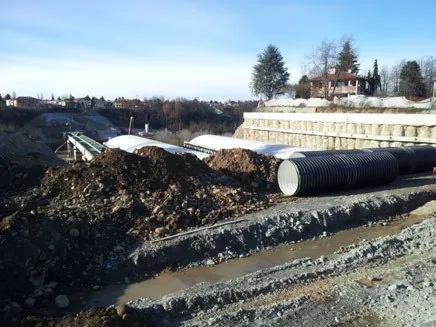
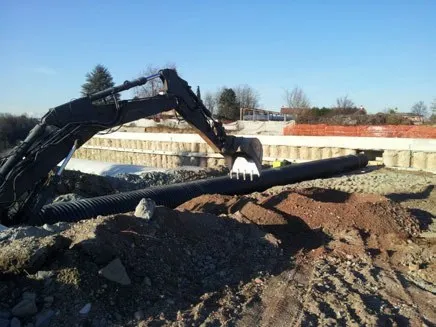
The pipe's light weight is decisive in rehabilitation and diversion works, where space is tight and timescales are short: at Gorla Maggiore the sewer main was diverted over a tunnel of the Pedemontana Lombarda using 300 metres of PALADEX DN 1600 pipes.
Related products
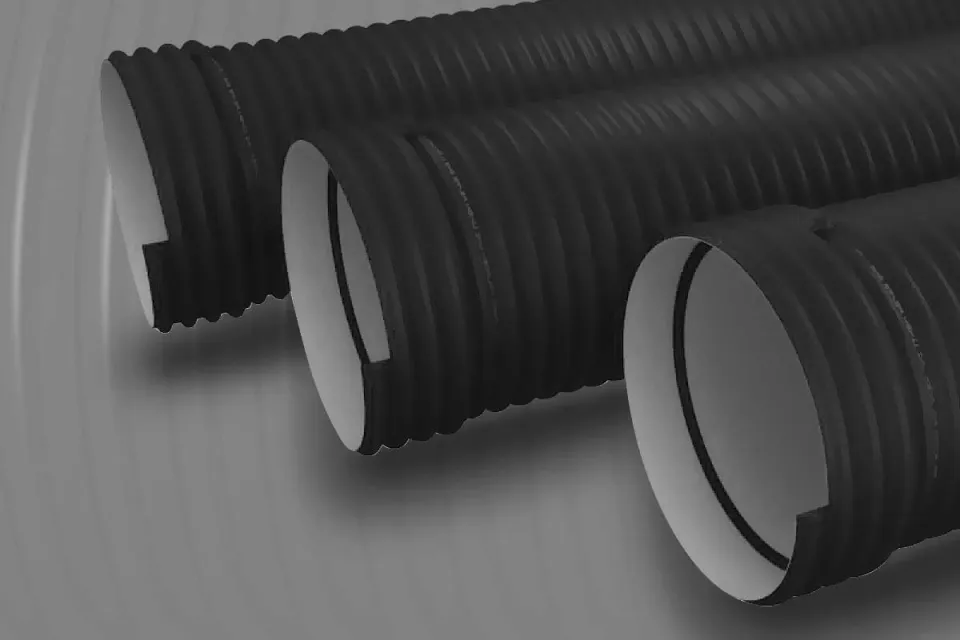 PALADEX pipes
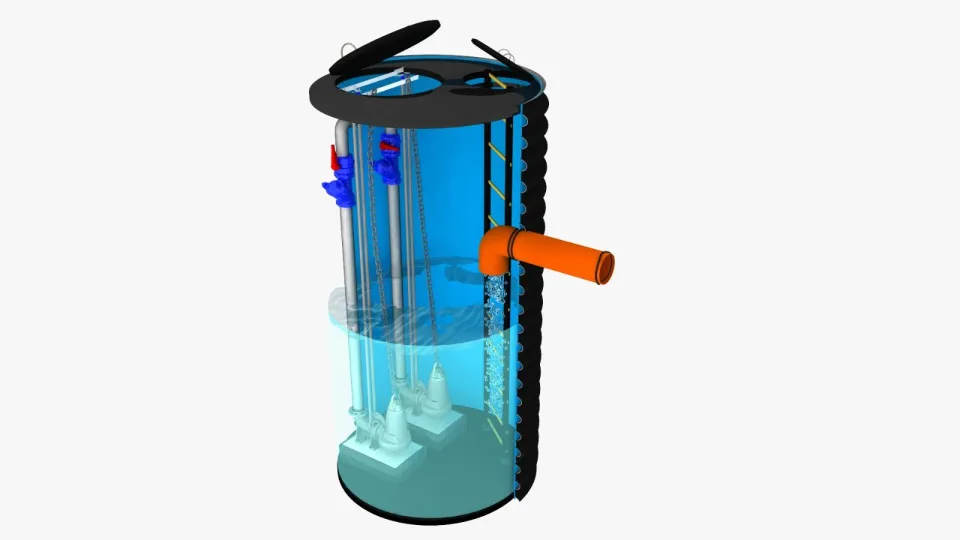 PALAPUMP pumping stations
References
Frequently asked questions
Why use steel and polyethylene pipes for sewerage?
They combine the stiffness of steel, which withstands high loads even at shallow cover depths, with the chemical and abrasion resistance of polyethylene, at a far lower weight than concrete and with certified watertight joints.
Can they be connected to existing manholes and pipes?
Yes. Connection systems are available for concrete manholes and for PVC, HDPE, vitrified clay and concrete pipelines, as well as custom-made PALADEX manholes.