PALADEX pipes
Jointing systems
Four jointing systems, all watertight to UNI EN 1277, which have comfortably exceeded the limits of the standard in laboratory testing.
Watertightness
UNI EN 1277 requires tightness up to 0.5 bar positive pressure and 0.3 bar negative pressure. PALADEX joints go further thanks to the stiffness of the spigot and socket elements, built like the pipe itself, the EPDM seals and the tight tolerances. The result is greater network safety and reliability.
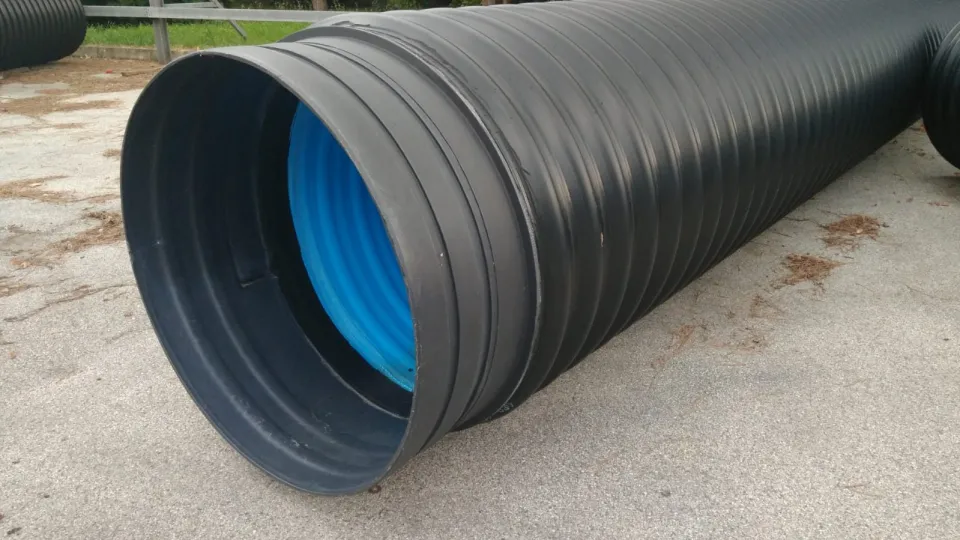
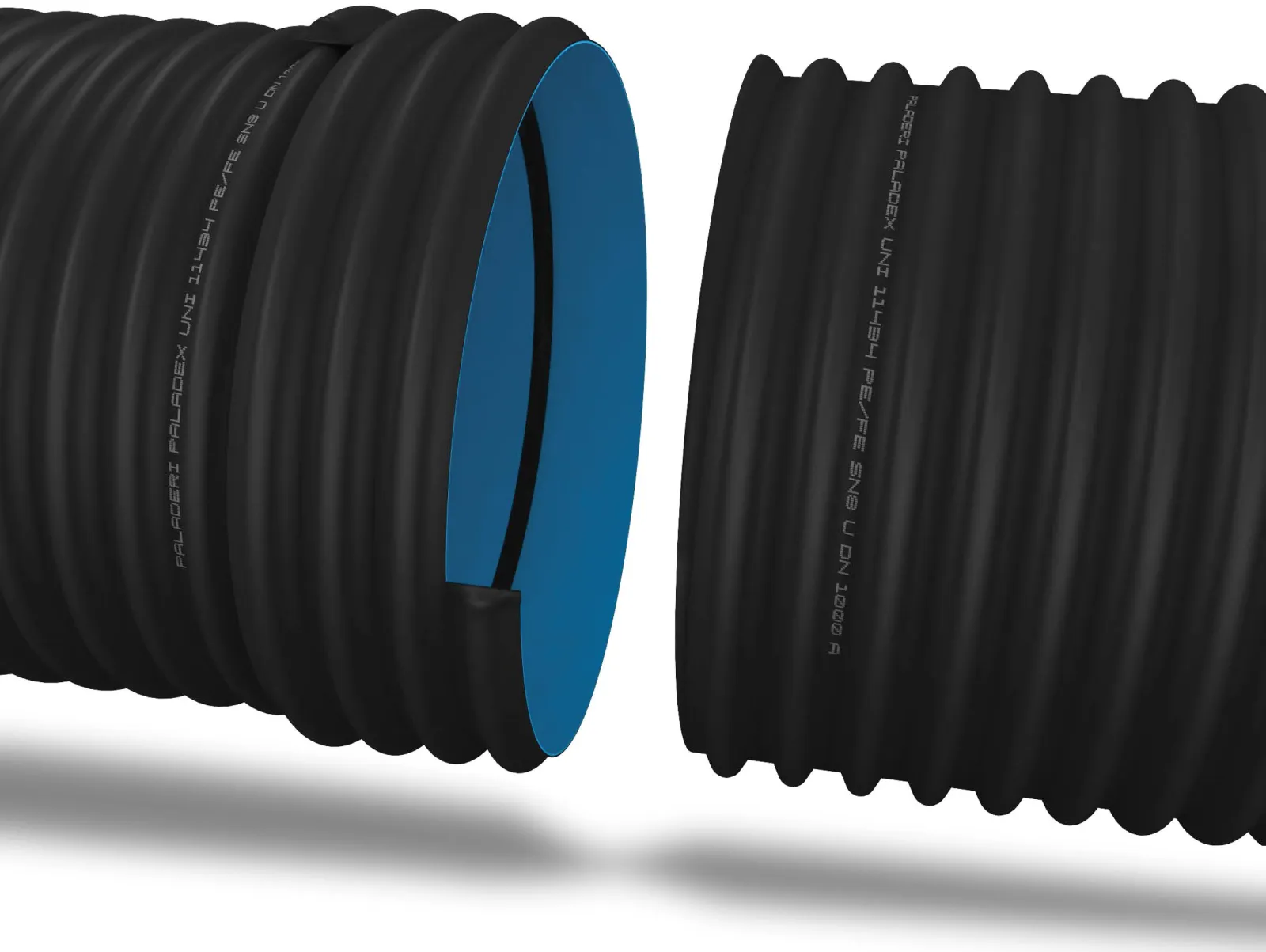
1. Socket joint
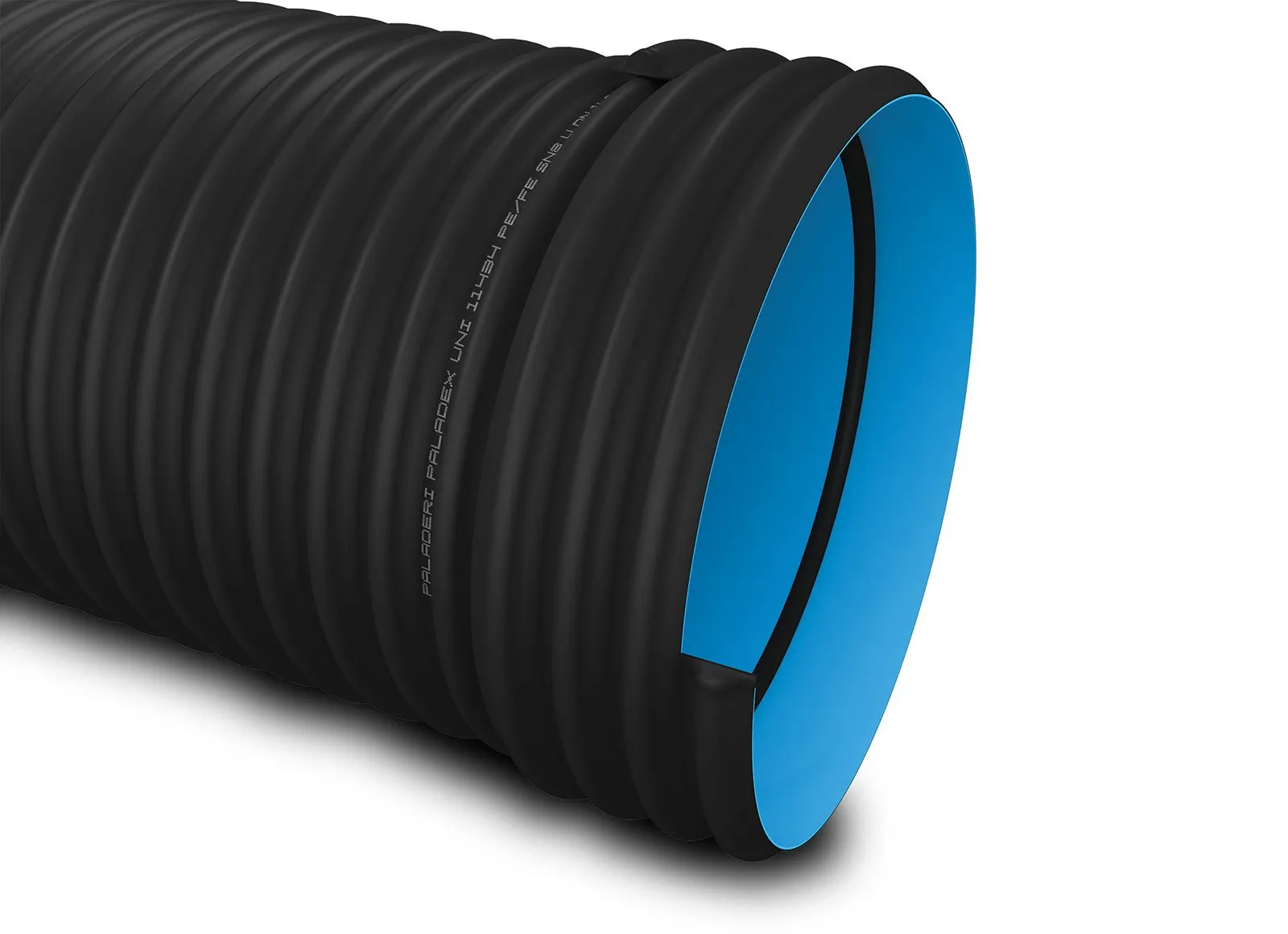
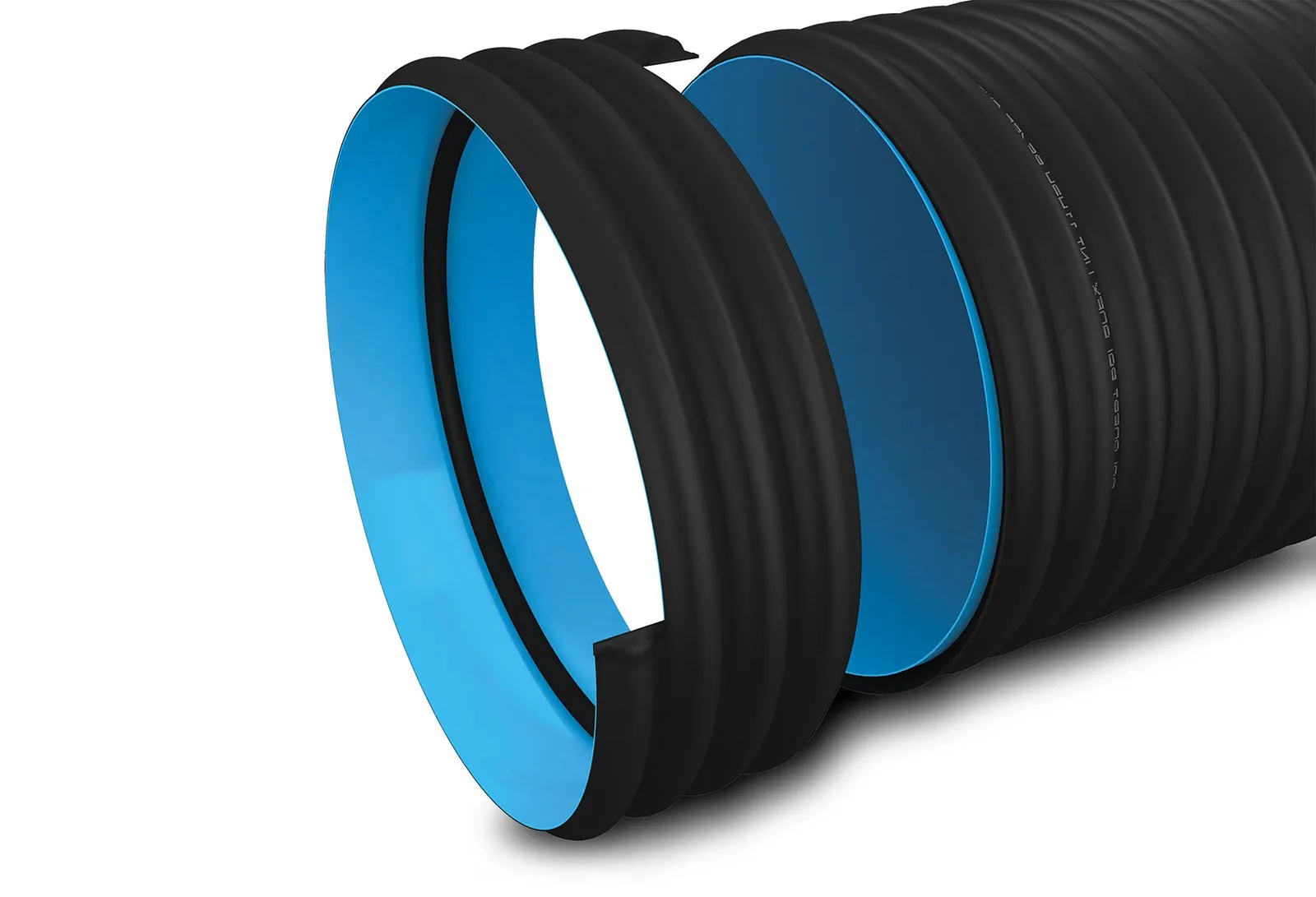
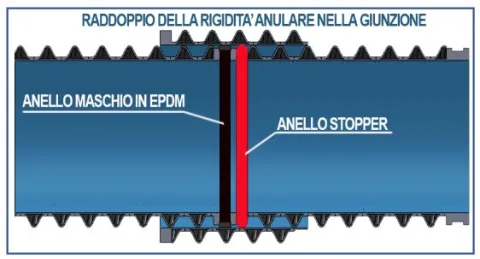
At one end of the pipe barrel, an HDPE ring with a groove for an EPDM lip seal (UNI EN 681) is welded in the plant; at the other, a socket made from a section of PALADEX pipe, with an internal stopper. Using a lubricant, the spigot is pushed about 30 cm into the socket up to the stopper, compressing the seal.
Tightness guaranteed up to 1 bar positive pressure and 0.3 bar negative pressure. Because spigot and socket have a steel-reinforced structured wall, the joint has twice the ring stiffness of the pipe and does not ovalise, one of the most frequent causes of leaks.
- Quick and easy installation
- Doubled ring stiffness at the joint
- Greater angular tolerance
2. Coupling joint
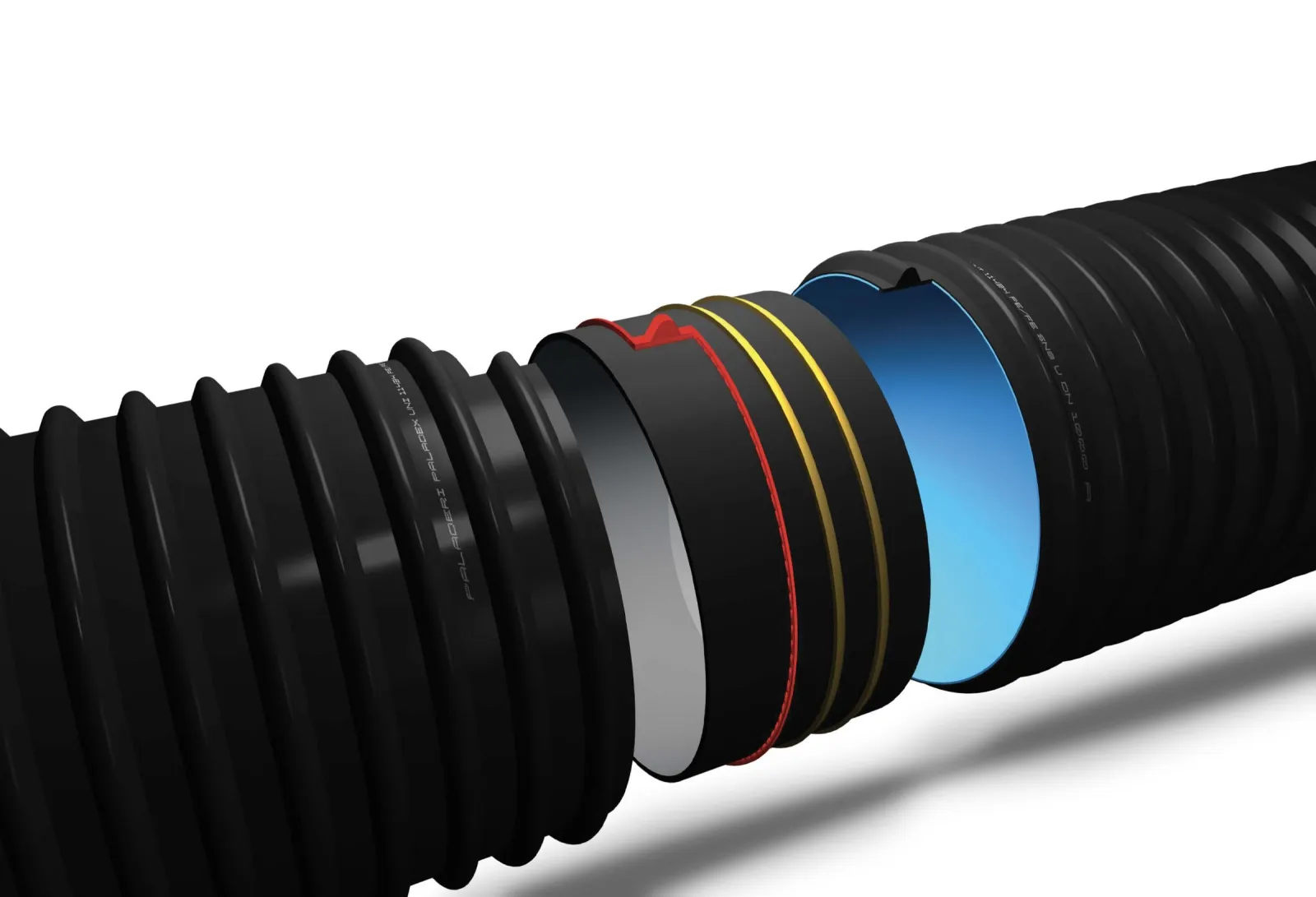
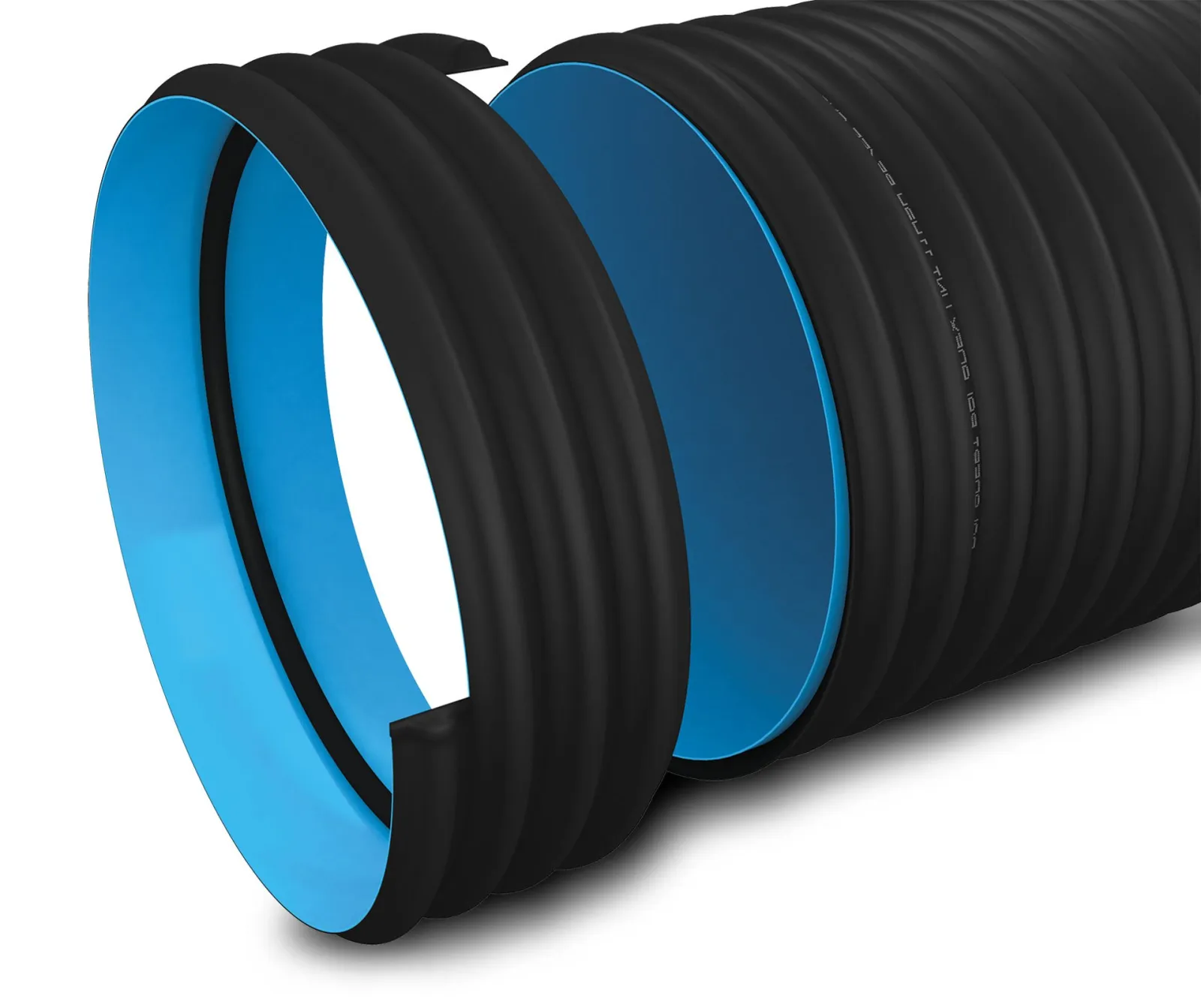
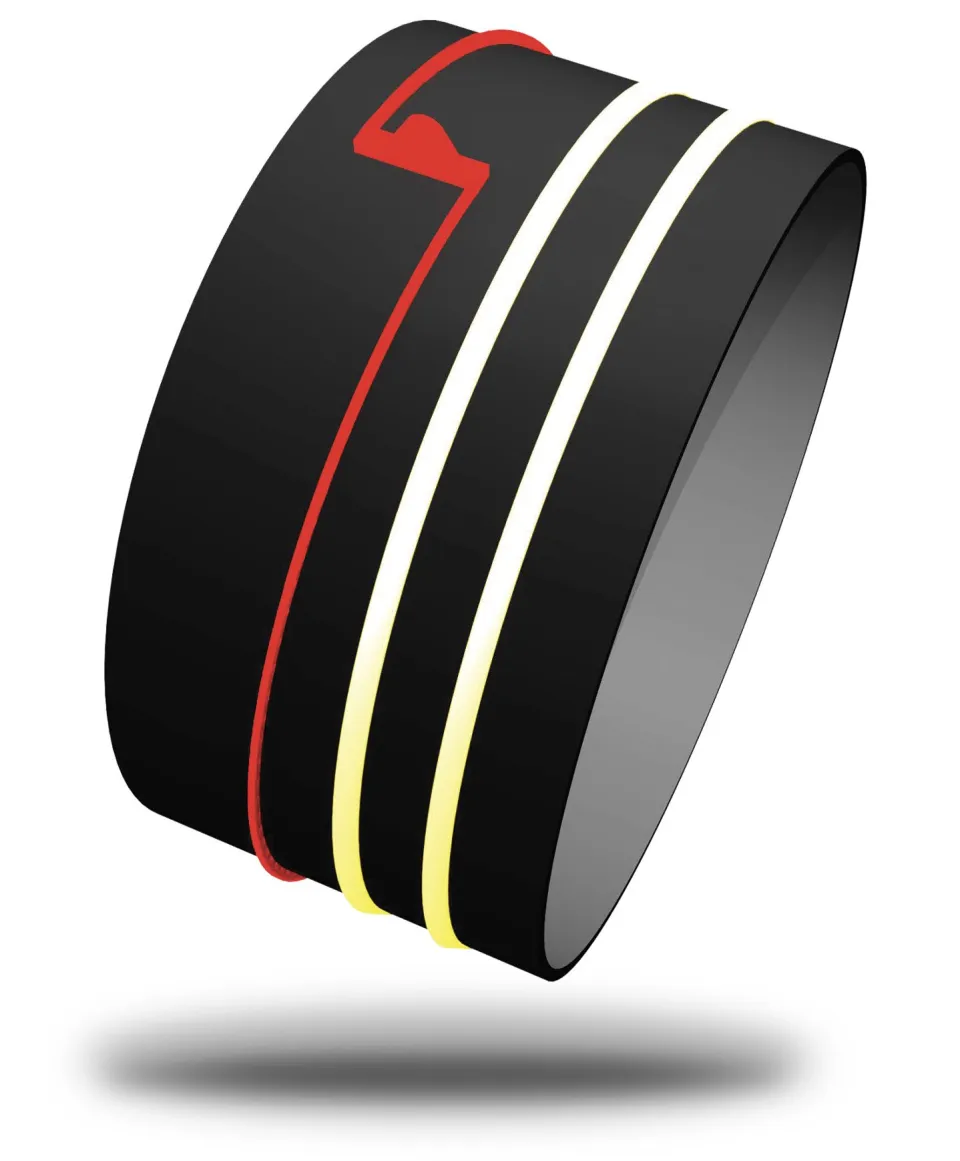
An internal HDPE coupling about 45 cm long, 5 to 10 mm thick depending on the diameter, is pre-welded into one pipe barrel in the plant; the protruding part has two grooves with EPDM seals. The other barrel is pushed on up to the shoulder.
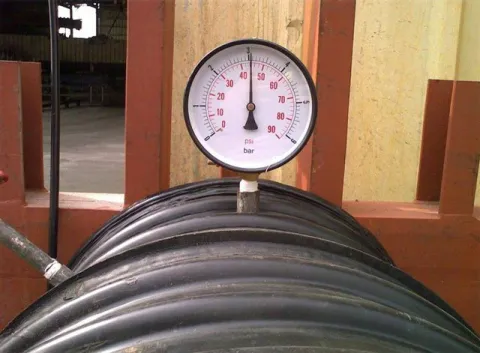
Guaranteed tightness is 1 bar positive pressure and 0.3 bar negative pressure, but internal tests have exceeded 4 bar, the limit of the measuring instruments. The system is patented and allows pipes to be cut to size on site as needed.
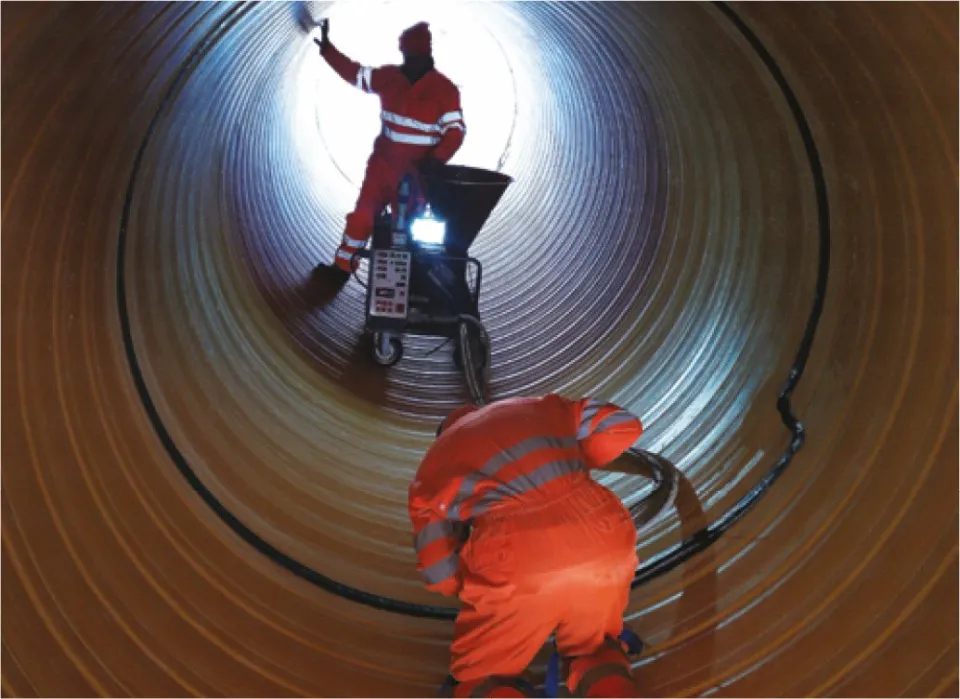
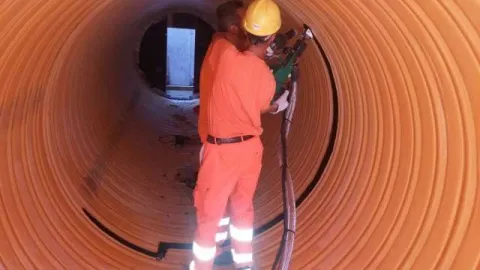
3. Welding with filler material
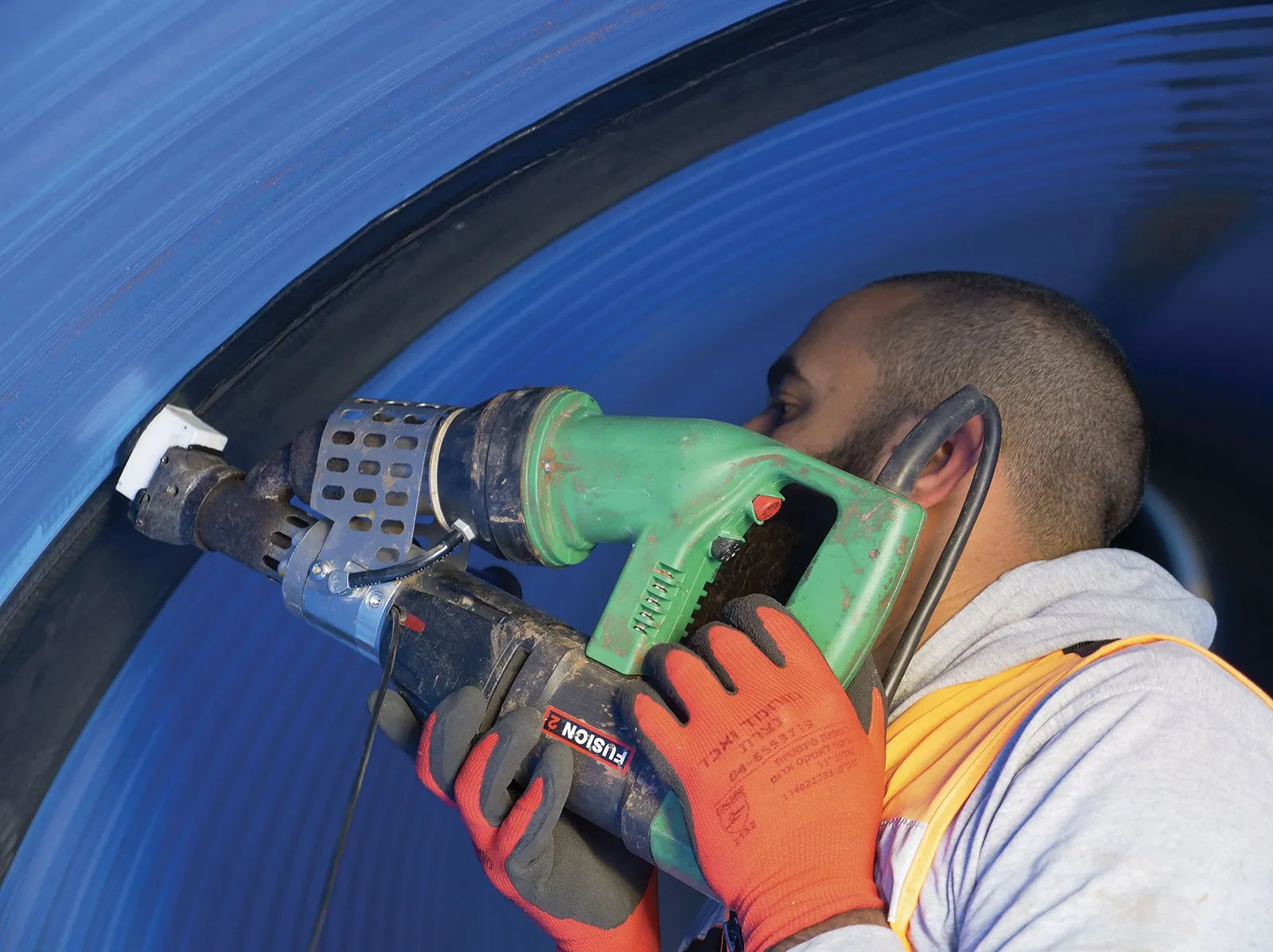
For pipes from DN/ID 1400 upwards, two pipe barrels are butted together and welded from the inside by polyethylene extrusion with a hand-held extruder, in accordance with DVS 2207-4, by qualified Paladeri staff, who can also train the site crews.
Guaranteed tightness of 1 bar positive pressure and 0.3 bar negative pressure; over 3 bar in internal tests. The weld also protects against root ingress.
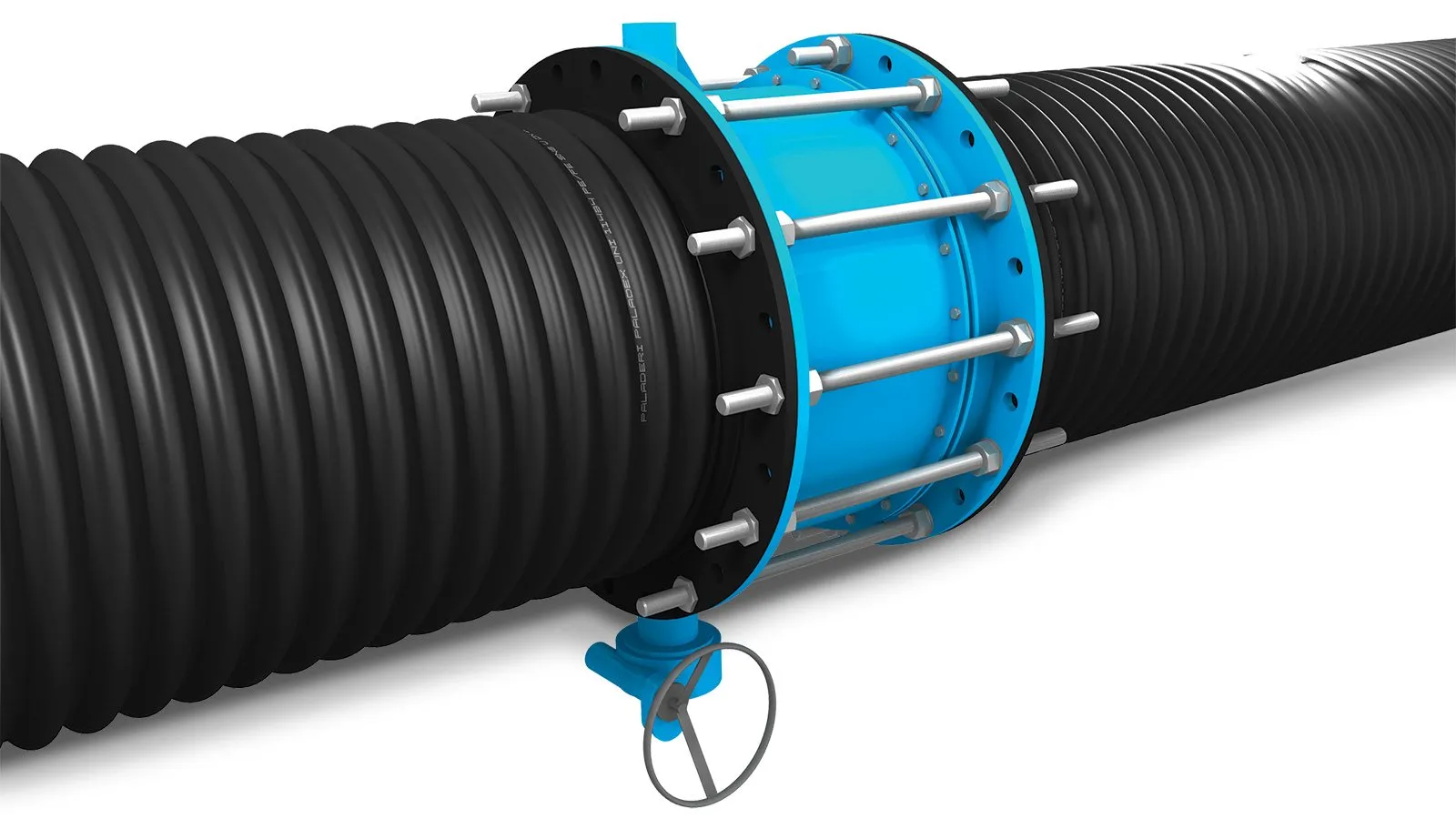
4. Flanged joint
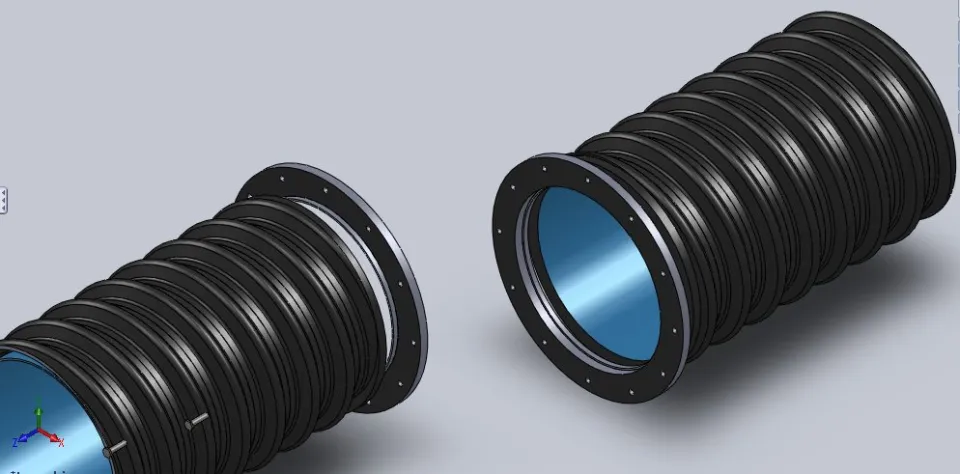
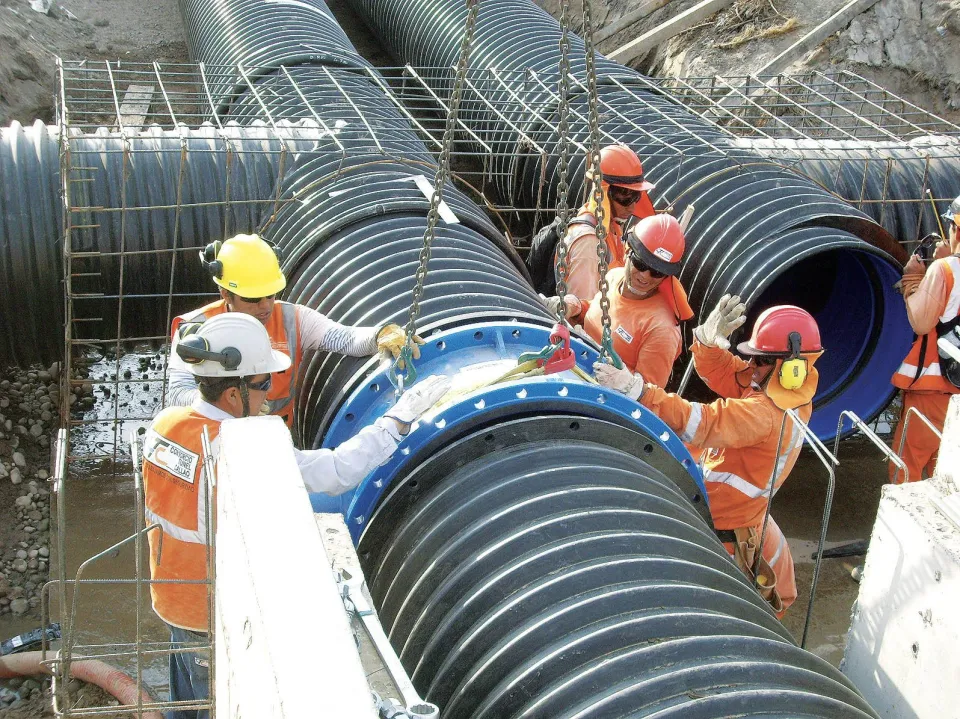
Up to DN/ID 1000, a short-spigot HDPE stub end with a loose steel flange is pre-welded in the plant. The joint is used to connect special fittings such as flanged gate valves, for underwater outfalls and to join the elements of tanks and storage volumes, and can be dismantled easily.
Tightening is a special process: lubricated bolts, cross-pattern sequence, torque wrench with increasing torque, re-tightening after 4 hours and, above 400 mm, after 24 hours. A report by the University of Padua documents its tightness.
Images of the joints